
Let's Talk
Albertus Magnus College offers a variety of Psychology degree options designed to fit your needs and lifestyle.
Contact Admissions
Contact Admissions
Undergraduate Degrees in Psychology


At Albertus Magnus College, the undergraduate Psychology program empowers students to understand human behavior, discover their purpose, and make a meaningful impact in the world. With small class sizes and personalized mentorship from experienced faculty, students gain both the knowledge and confidence to pursue careers that help individuals and communities thrive. Students can tailor their studies through four areas of focus: General Psychology, Human Services, Child Development, and Counseling and Mental Health. Each pathway connects academic learning with real-world application, preparing students to serve others and lead with purpose.
The General Psychology concentration builds a strong foundation in psychological principles and research, preparing graduates for a wide range of careers or advanced study. The Human Services concentration focuses on supporting individuals and communities through advocacy, social support, and service-oriented professions. Students interested in working with young people can pursue the Child Development concentration, which provides preparation for careers in counseling, early childhood settings, and youth-focused programs. The Counseling and Mental Health concentration offers structured preparation for careers that address emotional, behavioral, and educational challenges.
Wherever their path leads, students graduate ready to apply psychological insight, compassion, and critical thinking to work that truly matters.
What Makes Psychology at Albertus Different?
Engaged
Students
- Hands-on, experiential learning
- Interdisciplinary perspectives
- Emphasis on collaborative work
Great
Teaching
- Personally invested professors
- Small class sizes
- Innovative, well-rounded programs
- Resources and opportunities for research
Vibrant
Communities
- Lively extracurricular activities
- Campus-wide events
- Service and community engagement
Successful
Outcomes
- Active career counseling
- Opportunity-building networks
- Access to internships and professional experiences
Psychology Concentrations at Albertus
The Psychology department offers four concentrations of study leading to the baccalaureate degree:
General Psychology Child DevelopmentCounseling and Mental HealthHuman Services Minor in Psychology Minor in Human ServicesPsychology Student Perspective
“I came to Albertus because I had a great opportunity to play softball.
I didn’t know that once I decided to major in psychology how much of an impact the program would have on me.
I got an internship at the Friends Center for Children and was offered a position there working as an aide for special needs children.”
Maxine majored in Psychology and played both softball and basketball. She plans to graduate with an M.S. in Mental Health Counseling in 2021.
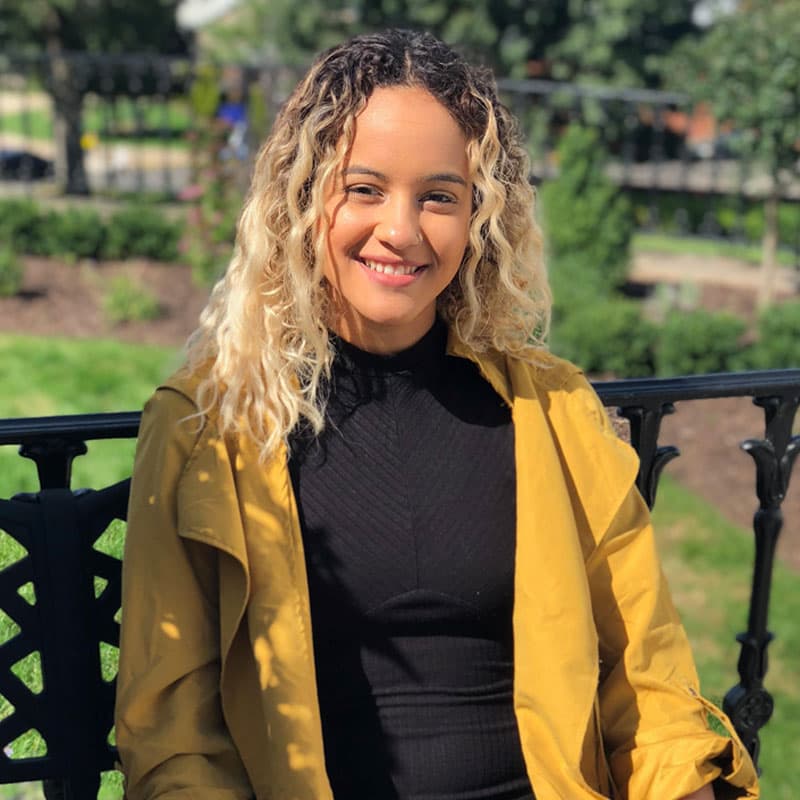
We have a very intimate setting here at Albertus, with only five hundred day students you do get the advantage of really connecting with your professors and your peers.
Alexia Levin, '14
Meet Dr. Stephen Joy
Dr. Stephen Joy is a professor of Psychology.
"The Psychology department is about curiosity, it is about learning what makes people do the things we do.”
Courses taught by Dr. Stephen Joy are Abnormal Psychology, Psychology Of The Exceptional Child, and Personality. His recent publications have been in the areas of personality psychology and innovation motivation.

The Albertus Psychology Faculty
Psychology Affiliate Faculty
Why the B.A. in Psychology?
At Albertus, the B.A. in Psychology challenges students to explore human behavior while discovering how their interests and talents can shape meaningful work in the world. Through engaging coursework, small class sizes, and close mentorship from experienced faculty, students develop strong critical thinking, research, and communication skills. This supportive learning environment encourages curiosity, reflection, and real-world application, preparing graduates for advanced study or careers focused on understanding and supporting individuals, families, and communities.
Psychology Five-Year Master's Degree Program
Earn a Bachelor of Science in Psychology and Master of Science Human Services in Five Years
The Department of Psychology offers its undergraduates the opportunity to pursue its
Master of Science in Human Services by completing an additional year after graduation.
Students must meet with their academic advisor prior to the start of their junior
year.
Where Will Your Psychology Degree take You?
Possible career paths with a Bachelor of Arts degree in Psychology include:
Psychology Courses
Upon completing the program of study in Psychology, students will:
- Identify and articulate major concepts, theories, and research findings in psychology;
- Identify, read, and critically evaluate professional literature in psychology-related fields;
- Design, conduct, interpret, and communicate the findings of empirical studies;
- For those who wish to pursue employment in helping professions (e.g., counseling or education): demonstrate basic knowledge and skills relevant to their projected careers.
Interested in learning more about the diverse courses offered at Albertus?
Psychology Masters Programs
Become Part of the Albertus Psychology Community
Have questions about Psychology? Ready for the next step?
Let us know how we can help plan your future.
Request Psychology Undergraduate Information
Request Psychology Adult Undergraduate Information
The Albertus Psychology Degree Mission Statement
The Department of Psychology prepares students to understand human behavior, promote well-being, and improve the lives of individuals and communities through scientific inquiry, ethical practice, and compassionate service. Grounded in the liberal arts and the Dominican tradition of the search for truth, the department develops critical thinkers who are prepared to lead, serve, and make meaningful contributions in a variety of professional settings.