
Bachelors of Arts in Mathematics
From the coding in computers to calculations involved in construction to digits that appear in your bank statements, mathematics is everywhere!
Overview
From the coding in computers to calculations involved in construction to digits that appear in your bank statements, mathematics is everywhere! Every day, you solve puzzles—some easy and some complex—with the logical thinking and analysis that stems from mathematics.
As a math major at Albertus, you’ll explore foundational concepts in algebra, calculus, number theory, geometry, probability and mathematical logic, in addition to computer programming and numerical methods. Our program supports teacher preparation and the ability to reason quantitatively and logically that is required for you to live a productive and fulfilling life.
You need mathematics whether you study sociology, psychology, political science, business, economics, physics, chemistry, biology or linguistics. Your degree in mathematics can lead to careers in teaching, business, government service and a wide range of industries, as well as graduate study in pure or applied mathematics.
In small and lively classroom settings, our friendly and accessible faculty members offer the one-on-one attention and support that helps you succeed. Choose our Special Topics course and tailor the mathematics major to meet your personal and professional goals.
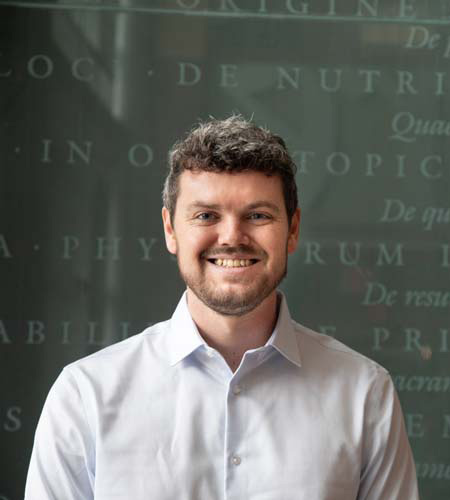
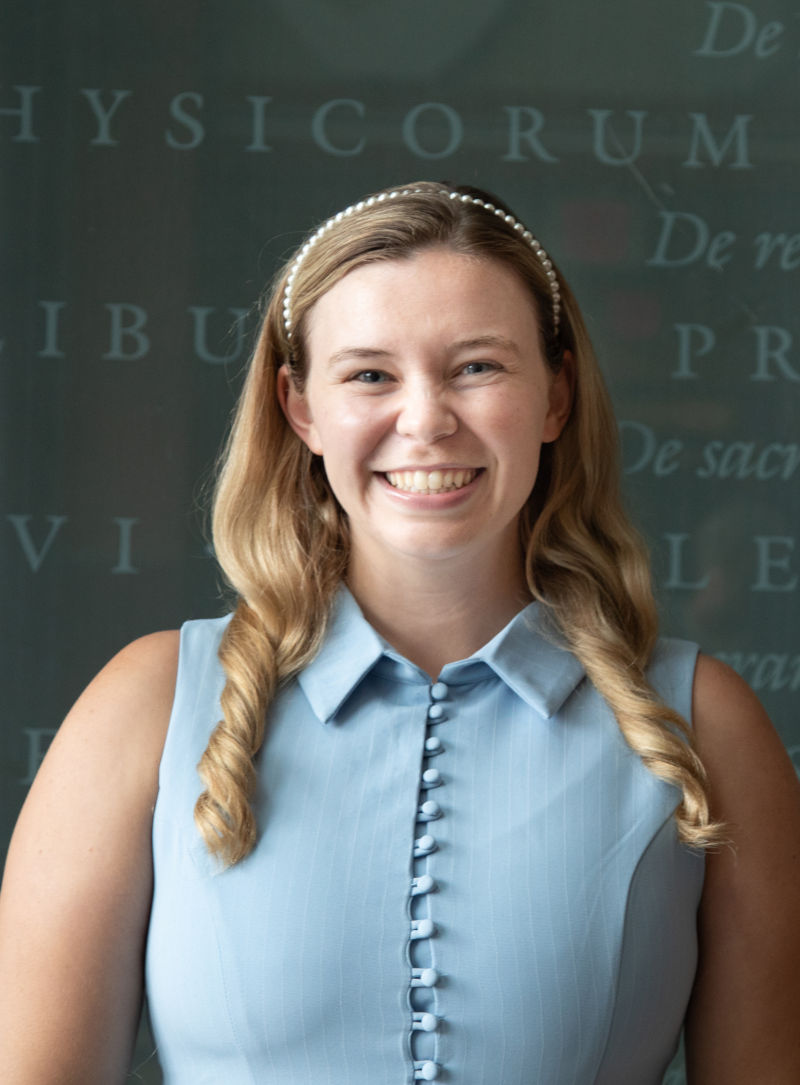
The Albertus Mathematics Faculty


Faculty Advisor
Coordinator of STEM Research

Professor of Chemistry

Mathematics Program FAQ
Frequently asked questions regarding the Bachelor of Arts (B.A.) in Mathematics, curriculum, teacher certification, career paths, and graduate study preparation.
What degree is offered in Mathematics at Albertus Magnus College?
Albertus offers a Bachelor of Arts (B.A.) in Mathematics.
What is the focus of the Mathematics program?
The program provides a strong foundation in mathematical theory, quantitative reasoning, and analytical problem-solving across pure and applied mathematics. It prepares students to apply mathematical principles in scientific, tech, financial, and social contexts.
What sample courses are offered in the Mathematics curriculum?
- Linear Algebra
- Theory of Proof
- Combinatorics
- Topology
- Number Theory
- Senior Seminar
Does the Mathematics major satisfy teacher certification requirements?
Yes. The major satisfies the educational requirements for the Initial Teacher Preparation Program leading to the Connecticut Mathematics, 4-12 (029) endorsement.
What career paths can I pursue with a B.A. in Mathematics?
- Actuarial Scientist
- Statistician
- Operational Researcher
- Financial Planner
- Investment Analyst
- Insurance Underwriter
- Economist
- Engineer
- Architect
- Accountant
- Secondary School Math Teacher
What is the career growth and industry outlook for mathematics graduates?
Employment across the overall quantitative and mathematical sector is projected to grow 21% over the next decade.
Entry-level roles like data analyst or financial coordinator regularly transition into specialized, high-paying roles in finance, tech, and data science.
Does this degree prepare students for graduate study?
Yes, it serves as an ideal foundation for graduate programs in pure mathematics, statistics, quantitative finance, data science, and software engineering.
Program Goals & Objectives
Upon completing the program of study in Mathematics, students will:
- Proficient knowledge base and breadth (introductory courses supplemented by upper-level courses);
- Proficient critical thinking skills (data interpretation/presentation especially in upper level courses e.g., MA 391);
- Proficiency in written/oral communication skills (lab reports, research papers in introductory & advanced courses, oral presentations and in-class discussions);
- Proficiency in mathematical modeling/experimental design (present both in introductory & advanced levels; should include a degree of creativity especially in the appropriate choice, design,, application, and interpretation of mathematical models/experimental design);
- Proficiency in information literacy (some courses include a “library component” for research projects/papers);
- Proficiency in quantitative analysis (data interpretation & presentation; covered in both introductory and upper-levels courses).
Interested in learning more about the diverse courses offered at Albertus?
Request Mathematics Undergraduate Information
The Albertus Mathematics Degree Mission Statement
The Department of Biology, Chemistry and Mathematics prepares students to explore the natural world, improve human and population health, and solve complex scientific and societal challenges through inquiry, quantitative reasoning, and ethical leadership. Rooted in the liberal arts and the Dominican tradition of the search for truth, the department empowers students to discover, innovate, and serve their communities through science.