
Let's Talk
Have questions about our Health Sciences program? Ready for the next step?
Request InfoApply TodayContact Admissions
Associate of Science in Health Sciences
Turn Your Experience into a Healthcare Career. Build What’s Next.
The Associate of Science in Health Sciences is designed for adults who are ready to
take a meaningful next step, whether you’re entering healthcare for the first time,
changing careers, or preparing for nursing and advanced study. This two-year, 60-credit
program combines scientific foundations, hands-on clinical training, and industry-recognized
certifications to help you move forward with confidence.
You’ll gain practical, job-ready skills while completing coursework that aligns directly with Albertus bachelor’s programs. With flexible delivery and a supportive learning environment, this program meets you where you are and helps you get where you want to go.
From your first course, your learning is connected to real healthcare settings, real patients, and real career outcomes.
What Makes Health Sciences at Albertus Different?
Engaged
Students
- Hands-on, experiential learning
- Interdisciplinary perspectives
- Emphasis on collaborative work
Great
Teaching
- Personally invested professors
- Small class sizes
- Innovative, well-rounded programs
- Resources and opportunities for research
Vibrant
Communities
- Lively extracurricular activities
- Campus-wide events
- Service and community engagement
Successful
Outcomes
- Active career counseling
- Opportunity-building networks
- Access to internships and professional experiences
Why Health Sciences?
Earn industry-recognized certifications, Certified Nursing Assistant (CNA), Phlebotomy Technician, and EKG Technician, along the way, so you can enter the workforce or advance while completing your degree.
Build confidence through labs, clinical experiences, and patient care training that translate directly to the workplace.
Flexible, career-driven, and supportive, this program is designed for working adults, caregivers, and career changers seeking purpose and stability.
What You’ll Learn to Do
Apply biological and health science principles to real-world healthcare settings
Deliver patient care skills aligned with CNA, EKG, and Phlebotomy certifications
Communicate clearly and compassionately with patients and healthcare teams
Navigate ethical, social, and cultural issues in healthcare
Perform confidently in clinical and laboratory environments
Lead with professionalism, responsibility, and service rooted in the Albertus mission
The Albertus Health Sciences Faculty
Where Will Your Health Sciences Degree take You?
Possible career paths with a Associate of Science degree in Health Sciences include:
This degree also serves as a strong foundation for continued study in nursing, public health, and other health sciences bachelor’s programs.
Scientific History of Albertus
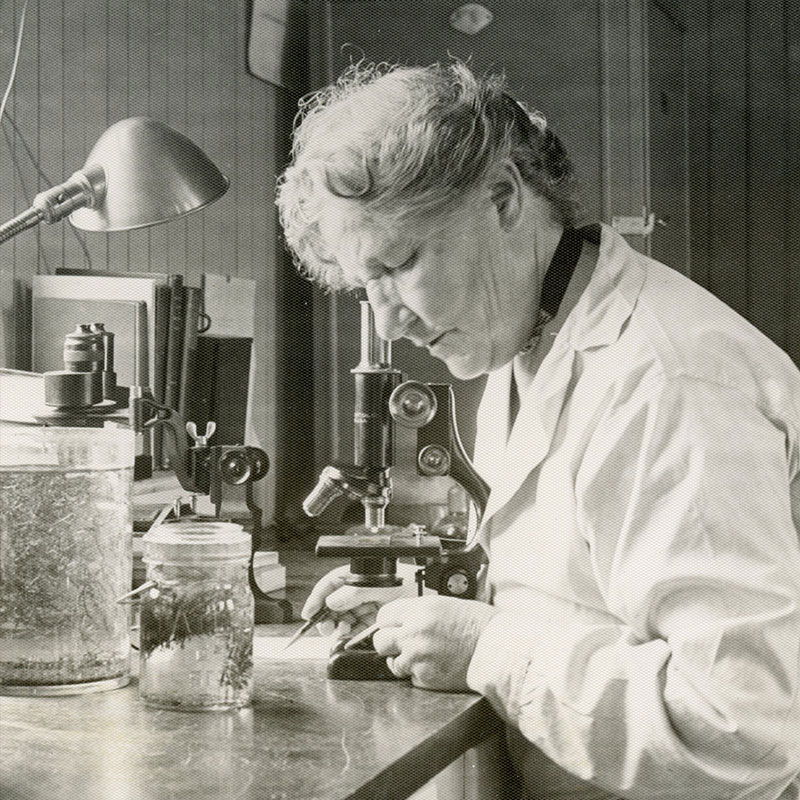
The sciences at Albertus go back to the early days of our history. In 1927, Marcella O’Grady Boveri arrived at this fledgling college to establish a department of science.
Marcella's background was amazing for a woman of her time.
She was, in 1885, the first woman to graduate from Massachusetts Institute of Technology with a concentration in biology; she studied comparative zoology and embryology at Bryn Mawr; and by 1893 she had become a full professor at Vassar.
Three years later, she was admitted to study science at the University of Wurzburg in Germany, the first woman ever granted acceptance to the science program there. At Wurzburg, she studied with Theodor Boveri, director of the Zoological–Zootomical Institute and one of the world’s first cancer researchers. They married in 1897 and worked together on the chromosome theory of cancer until his death in 1915.
Marcella Boveri remained in Germany until 1926 when she returned to the United States for what was supposed to be just a brief visit: however, fortuitously for Albertus, she learned from a friend who was married to a former Yale University dean that the new liberal arts college in New Haven was looking for a woman of distinction to create and run its science department. When her contacts at Yale assured her that the resources of its Osborn Zoological Laboratory and Yale libraries would be available to her, she accepted the offer from Albertus. Marcella Boveri remained at Albertus until she retired in 1943; she died in October 1950.
Health Sciences Courses
Is This Program Right for You?
- Are ready for a career with purpose and stability
- Want credentials that lead to immediate employment
- Are considering nursing or long-term growth in healthcare
- Need a flexible program that respects your responsibilities
- Value service, ethics, and meaningful work
Ready to Get Started?
Your experience matters and your next step can make a difference. Explore the Associate of Science in Health Sciences, connect with admissions, and begin a healthcare journey rooted in purpose, preparation, and possibility.
Interested in learning more about the diverse courses offered at Albertus?
Become Part of the Albertus Health Sciences Community
Have questions about Health Sciences? Ready for the next step?
Let us know how we can help plan your future.
Request Health Sciences Undergraduate Information
The Albertus Health Sciences Degree Mission Statement
The mission of the Department of Biology, Chemistry and Mathematics is to build upon the College’s Liberal Arts focus to prepare students with the knowledge, skills, and judgment necessary to be responsible, able practitioners in their chosen fields. The majors are designed to prepare students for careers in pharmaceutical sciences, medicine, allied health careers, science education, research, biotechnology industry, government service, and scientific writing. Majors are advised individually about their choice of courses according to their special interests and abilities. The faculty works closely with students, helping them to prepare for entrance into both professional and graduate programs.